
What Your Inbox Is Actually Made Of
Almost every vendor in this space sells cart recovery. Very few talk about the first four lines here, which are four fifths of the work — and not one of which is a conversation.
Illustrative. The first four lines are database questions. The fifth is the reason you have a team.
- A lookup, not an articleThe agent reads the actual order through a tool you define — not a help page about orders
- Stock and variantsAvailability, sizes, and the alternative that is genuinely in the warehouse
- Returns within the rulesYour window, your exclusions — and the statutory rights underneath that are not yours to shorten
- One threadType at 23:00, ring at 09:00, called back at 14:00 — one record, one order number
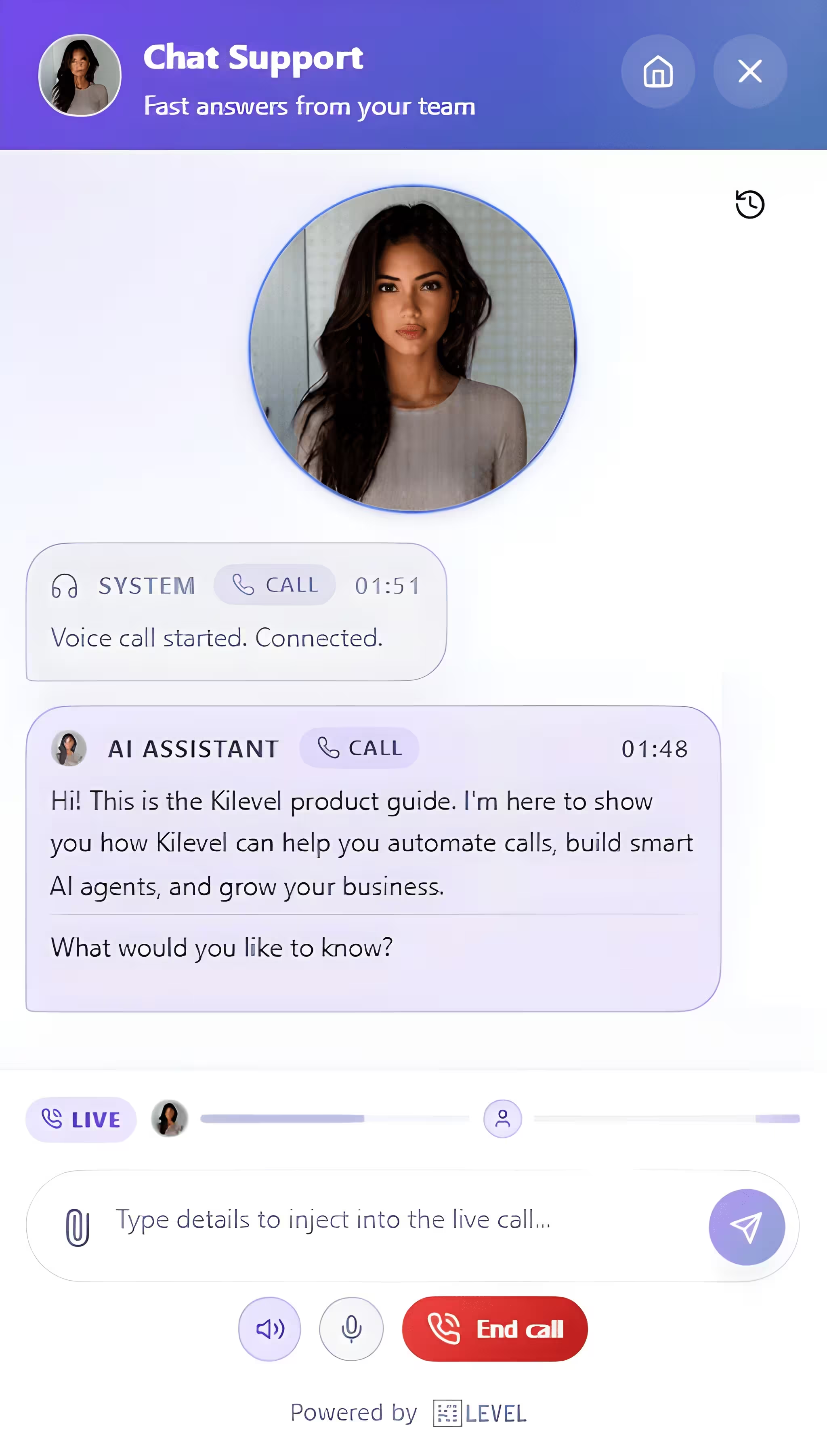

Chat, Call, Callback — One Record
A shopper can type at 23:00, ring at 09:00 and be called back at 14:00, and it is one thread the whole way. Nobody re-enters an order number, and the agent that answers already knows what the last conversation was about.
Four Events Worth Calling About
Inbound is half the story. The other half is four moments where your system knows something has gone wrong before the customer does — and where a call inside the hour costs far less than what follows.
The delivery failed
You know before she does. A call inside the hour offers a neighbour, a locker or a new day — while the parcel is still at the local depot rather than on its way back to you. A re-delivery arranged today costs a fraction of a return, a refund and a repurchase.
The cart was abandoned
The call recovers some of them. The typed reason field improves all of them: after a thousand carts, "postage at checkout" stops being an opinion somebody has in a meeting and becomes a number with a roadmap attached.
A return was requested
The agent checks the window against the real order, offers an exchange where that is better for both sides, and issues the label — in chat, on the phone, or wherever she started.
Nothing for 120 days
Ask what went wrong first, then make an offer that answers it. Discounting first is the habit that quietly erodes the margin, which is why "root cause explored" is a field of its own here.
The Most Expensive Habit in Support
A discount offered before anybody asked why. It saves the conversation and costs the margin, and because it works it repeats — until the price is the product. So what gets measured here is whether anybody asked at all.
The skipped step is the expensive one. It is also the only one you can train out.
Illustrative. The customer-support and retention & win-back packs both measure this — both under Performance Analytics.
Invent an offer you did not authorise. What may be offered, to whom, and up to what value is an authorisation rather than an improvisation — and what was actually offered is a typed field, so the same answer comes out across ten thousand conversations. The same goes for returns: your rules sit on top, statutory rights underneath, and the agent may not shorten the second with the first.
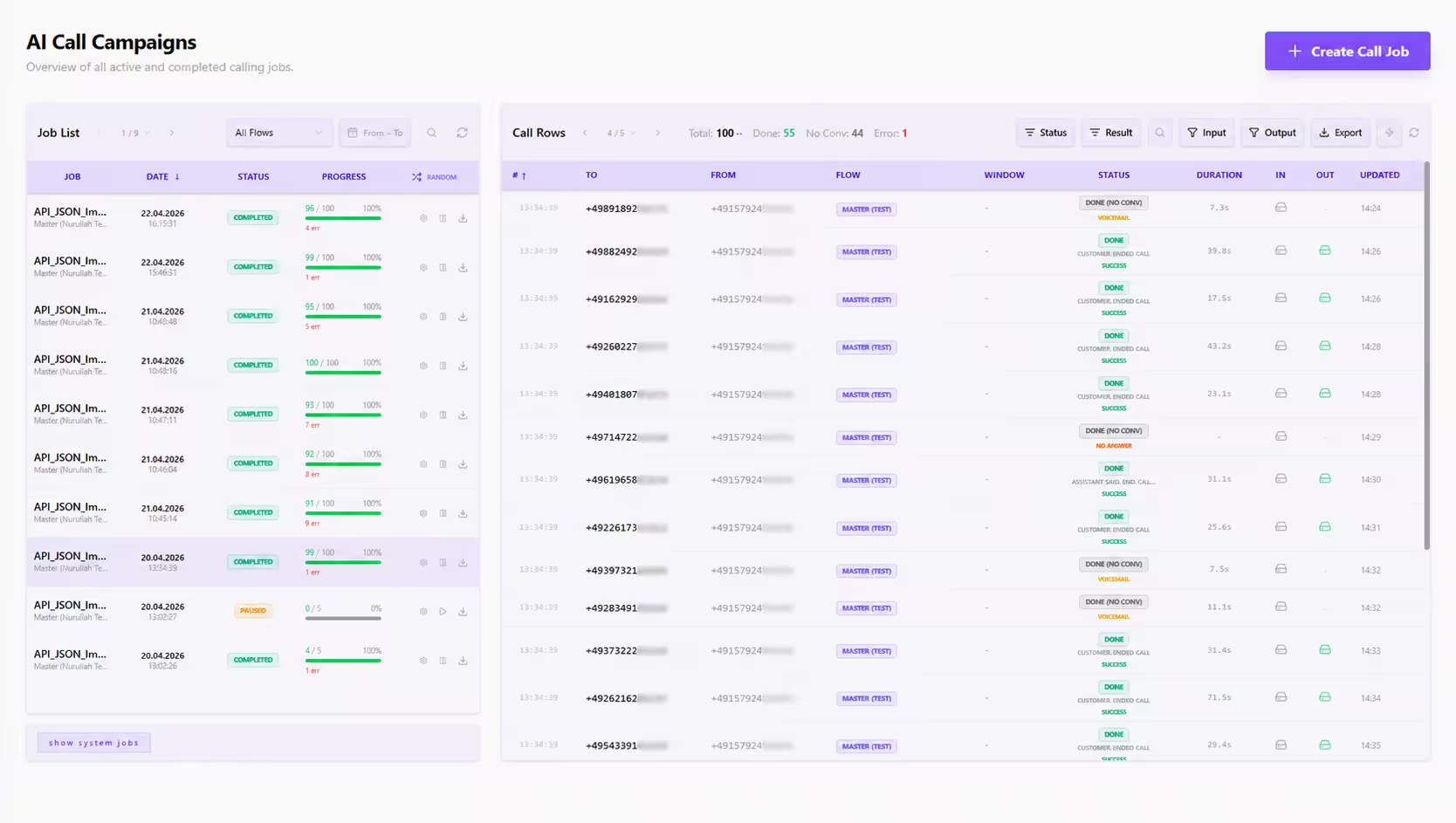
The widget, the inbox and the hand-off to a person are under Customer Support, the outbound machinery — windows, ceilings, retries — under Outbound, and the workflows behind the four events under Automations. The tools that let the agent read your orders are ones you build — against any HTTP endpoint or MCP server.
- 4/5
- Are lookups
- One
- Thread across channels
- 1 hour
- Before the parcel turns around
- 0
- Invented discounts
Answered by reading the actual order
Chat, call and callback all write into the same record
A re-delivery today instead of a return and a refund
What may be offered is an authorisation