
An Answer Is Not a Transcript
The same template is laid over every conversation, and what comes out has the same shape every time: typed fields on declared scales. That is what makes two thousand of them comparable — and it is why the missing field matters more than the other four.
A declared range, not a vibe
A field states what it may contain: a zero-to-ten likelihood, a five-point item, a one-to-seven effort score, an enumeration of exactly the options you allow. The model is constrained to it rather than asked nicely.
And which end of it is good
Each field says whether higher is better, lower is better, or neither. Without it, an effort score and a satisfaction score average into a number that means nothing, and a dashboard shows a rising line for a worsening experience.
Omitted beats guessed
If the conversation never answered a question, the field comes back missing. A model that fills the middle to be helpful is the single fastest way to make a feedback programme quietly worthless.
The reason, beside the value
Any field can be set to carry the part of the conversation it was inferred from. It is stored next to the value, so a number somebody disputes is checkable without listening to twelve minutes of audio.
Good and bad values, named
For the fields that are categories rather than scales, you name which values count as good and which as bad. "Escalated to a manager" is not simply a different answer from "resolved first time".
Or take a published one
Inventing your own NPS means you can never compare yourself to anybody. The fixed metric packs keep each benchmark on the scale it is published on, and your own fields sit alongside them rather than instead of them.
A dashed field was never answered
The difference between "no competitor mentioned" and "never asked" is exactly the difference a guessed middle destroys.
Three high bars, two pieces of good news and one bad. Without the declared direction, a dashboard draws a rising line here for a worsening experience.

Thousands of Them, Inside the Hours You Allow
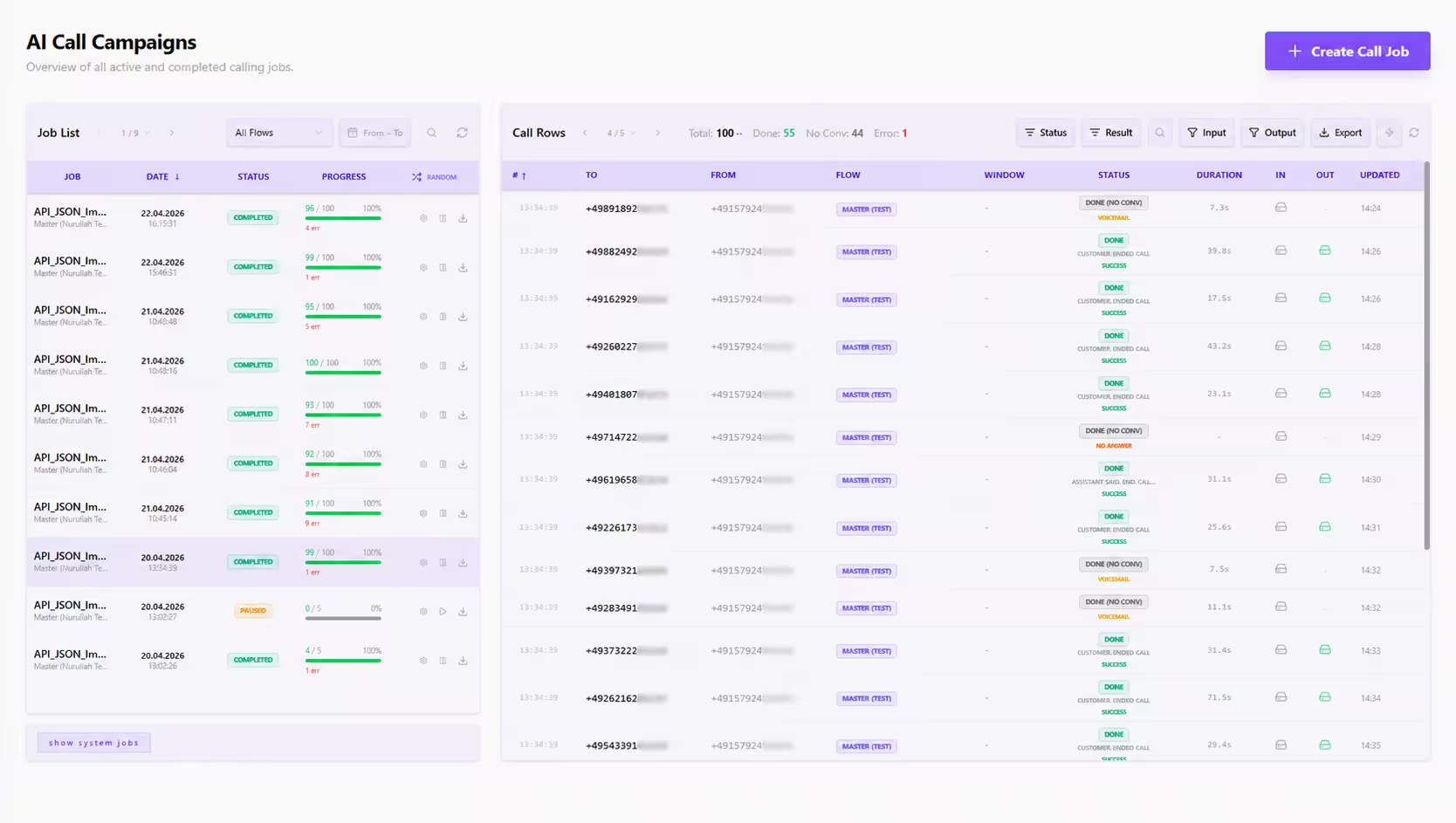
The same job machinery the outbound dialler uses runs the survey: a list, a window it may call in, a ceiling on concurrent calls, and retries decided separately for busy, no answer and voicemail. Nobody is rung at 21:40 because a scheduler was behind.
And How the Question Gets Asked at All
Response rate decides the result long before the analysis begins. So the question is a conversation rather than a link to a form — on whichever channel, and at whichever moment, the person will actually answer.
Outbound calls, at the hours you allow
A contact list becomes a job with a calling window, a concurrency ceiling and retry rules decided separately for busy, no answer and voicemail. The survey does not ring anybody at dinner because the queue was behind.
Chat, SMS and WhatsApp
The same questions run as a conversation in the website widget or over a messaging channel, where the answer arrives three hours later and that is fine. Same schema, same row at the end.
Straight after the thing you are asking about
A finished support call, a delivered order, a closed ticket — any of those can start the survey from a workflow. Feedback collected two weeks later is a memory; feedback collected the same afternoon is evidence.
In whichever language they answer in
The conversation happens in their language and the fields come out in your schema. You are not running eleven surveys and reconciling eleven spreadsheets.
The Detractor Who Is Still on the Line
Most feedback programmes score a conversation once it is over. That is too late for the one call where it mattered. Attention evaluates the same schema against the conversation in progress, and is allowed to act before anybody hangs up.
The rule reads the answer as it lands
An Attention rule re-runs the same schema against the conversation in progress, every few seconds, and reads one field out of the result. A detractor is identified while they are still on the line.
And can hand the call to a person
Forward the call outright, or raise the session on the supervisor dashboard in its own colour with a sound at the desk. The recovery conversation happens now, not in a follow-up queue next week.
Or start whatever should happen next
A score below your line is an event. It can open a ticket, email an owner, add the customer to a win-back campaign, or book a call with the account manager — as a workflow, on the same canvas as everything else.
Or simply say so before anybody looks
Standing rules watch the aggregate as well as the individual, so a segment sliding for three weeks reaches somebody without waiting for the monthly review that would have caught it.
Illustrative values — the threshold, the delay and the interval are settings rather than defaults we picked.
What Happens to the Answers Afterwards
Because every answer is typed, analysis is a filter rather than a project. And because the conversations get the same analysis everything else does, they sit beside your calls and chats rather than in a tool of their own.
The same cohort before and after the change, rather than two averages side by side.
Illustrative. The third number is the one nobody usually sees, and the one that explains why question 4 needs rewriting.
The same rows feed scorecards, metric packs and standing rules under Performance Analytics — and whatever should happen next is built on the same canvas as Automations.
What Teams Actually Run With It
The same machinery six times: one schema, one agent, one job and one rule.
Post-resolution CSAT, the same afternoon
Closing a ticket starts a workflow that calls two hours later, asks the five-point question and the why, and writes both into the row — with the sentence the rating was read from attached.
The detractor you could still have saved
A rule reads the score the moment it is given. Anything at six or below is forwarded to a person while the customer is still on the phone, rather than appearing in a report eleven days later.
A quarterly wave that finishes in two days
Two thousand relationship calls run inside your calling hours at a concurrency you set. Because every answer is typed, the result splits by segment, tenure and product without anybody tagging a transcript.
Asking the follow-up the number cannot answer
A low score is a question, not a conclusion. The agent asks why, classifies the cause into your own enumeration, and the row is routed to the team that owns that cause rather than to a shared mailbox.
The report nobody has to assemble
When the job drains, a workflow aggregates the rows, writes the sheet and sends it to the people who asked for it — with the segment cuts already made, because the cuts are columns.
Testing the questionnaire before it meets people
Simulated respondents with different personalities run against the survey agent overnight. A question that fails to elicit an answer shows up as a field that keeps coming back empty — before two thousand real people hear it.
And you do not have to design any of it by hand
The schema, the agent that asks the questions out loud, the escalation rule and the workflow around the whole wave are all buildable and editable with AI assistance, the same way everything else on Kilevel is.
The schema, from what you want to learn
Describe the question you are actually trying to answer and the assistant proposes the fields: their types, their ranges, which direction is good, and which of them should carry their reason.
And the agent that asks them out loud
Turning a field list into questions a person will actually answer is its own skill: order, phrasing, how to ask a zero-to-ten question without reading out eleven numbers, when to stop.
The escalation rule, against a real field
Say what should pull somebody out of their chair and it writes the rule against a field that exists, with the threshold, the branch and the action filled in before it ever runs on a live call.
The workflow around the wave
The trigger, the list query, the job, the branch for detractors and the report at the end arrive as one plan rather than as five things you wire together over a fortnight.
In every language you are asking in
Including the disclosure where it is required, and including the fact that a five-point scale does not translate word for word into every language it is asked in.
And it will tell you what it invented
Your detractor threshold, your segment names, your definition of a completed response — listed as assumptions and asked about, rather than written quietly into a schema two thousand calls will run against.
A schema is the one thing you cannot fix afterwards — two thousand responses to a badly typed field are two thousand responses you cannot use. So every proposal arrives as an explicit list of edits, with its assumptions stated, before anything runs.
Legal notice: survey calls to individuals are lawful only where explicit consent exists or a legitimate interest under applicable law (e.g. GDPR Art. 6) has been documented; rules for existing customers differ by jurisdiction. Where conversations are recorded, consent must be obtained before recording starts, and where the other party is speaking to an AI, that must be disclosed. The Kilevel platform provides the technical infrastructure; legal responsibility for compliant use rests with the operator.
Declared, not inferred — with a reason per field when you want one
A question nobody answered stays unanswered, and that is itself a finding
The detractor is found while there is still time to keep them
The segment cuts are columns, not an afternoon of tagging